

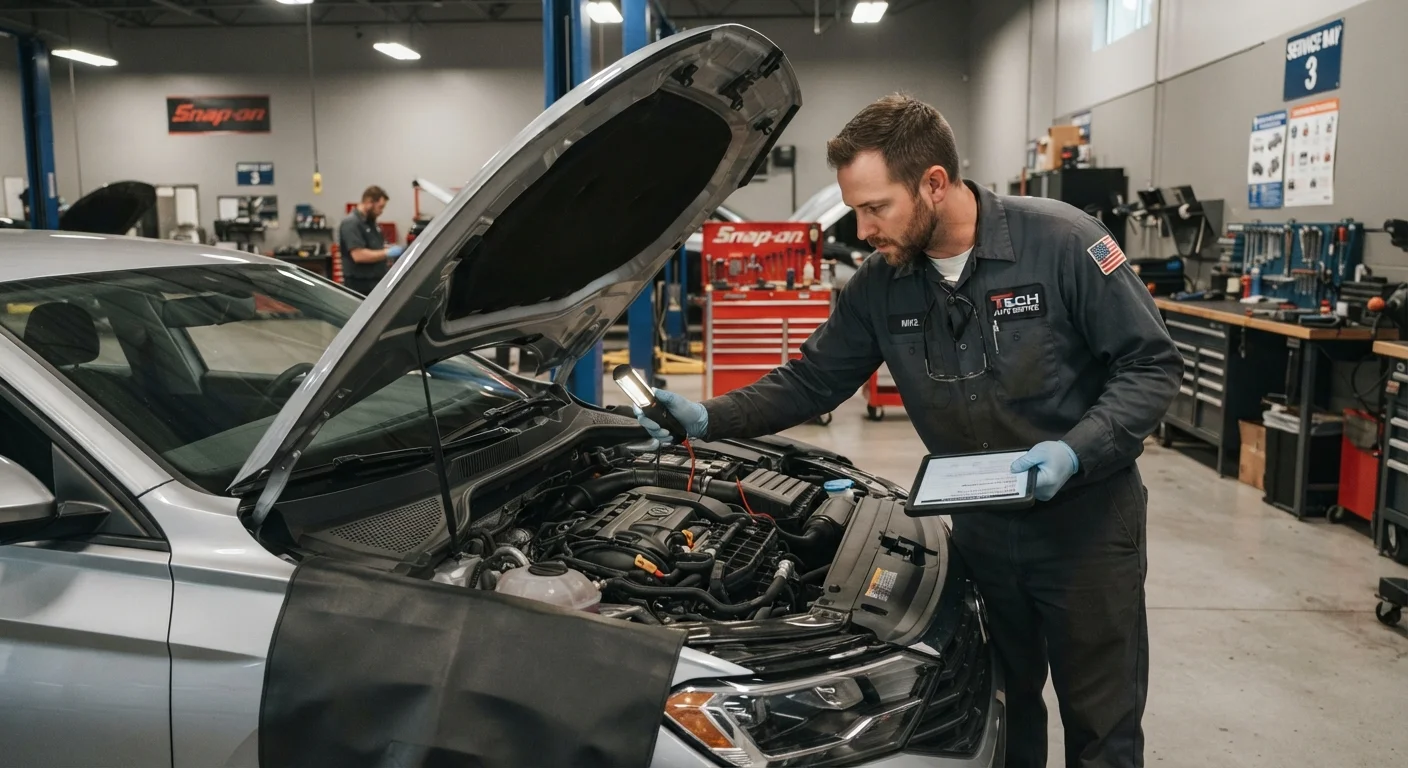
The Three Service Tiers Explained
Most service shops and dealerships organize vehicle maintenance into three tiers: interim, full, and major. Understanding what separates them helps you avoid paying for the wrong level - or under-servicing your vehicle.
Interim service is the lightest level, designed for higher-mileage drivers who cover ground quickly. It typically includes an engine oil and filter change, a check of fluid levels (brake fluid, coolant, power steering), tire pressure assessment, and a visual inspection of key components. It is usually recommended every 6 months or 6,000 miles.
Full service builds on the interim by adding a more thorough inspection of brakes, steering, suspension, exhaust, belts, and electrical systems - often totaling 50 or more individual checks. It is generally recommended annually or every 12,000 miles and represents the standard for most everyday drivers.
Major service (sometimes called a manufacturer service) goes further still, incorporating component replacements on a scheduled basis - spark plugs, air filters, fuel filters, and in some vehicles, the cambelt. See our guide to vehicle service schedules for a detailed look at how manufacturer intervals work.
50+
Inspection points in a typical full service
Industry-standard full service checklists from major automotive organizations typically include more than 50 individual inspection items.
12,000 mi
Common full service mileage interval
Many manufacturers recommend a full-scope service approximately every 12,000 miles or 12 months, whichever comes first.
3-4 hrs
Typical full service duration
A standard full service generally takes between three and four hours at a qualified garage, excluding any additional repair time.
What a Full Service Typically Covers
While no universal checklist exists across all providers, a standard full car service in the US will generally include the following categories:
- Engine: Oil and filter replacement, visual inspection for leaks, drive belt condition check
- Fluids: Top-off or replacement of coolant, brake fluid, power steering fluid, and windshield washer fluid
- Brakes: Inspection of pads, discs, drums (where applicable), calipers, and brake lines
- Tires: Tread depth measurement, pressure check, visual inspection for damage or irregular wear
- Steering and suspension: Check for play, wear, or noise in joints, bushings, and shock absorbers
- Lights and electrics: Test of all exterior lights, horn, battery condition, and charging system
- Exhaust: Visual inspection for corrosion, damage, or loose fittings
- Cabin: Pollen/cabin air filter check, wiper blade condition, and seatbelt integrity
Notably, a full service does not automatically include repairs. Mechanics identify issues and quote separately for any work that falls outside the service scope.
Always Ask for a Pre-Service Checklist
Before authorizing any service, ask the garage for a written list of every item they will inspect and replace. This lets you compare quotes accurately across providers and gives you documentation if questions arise afterward. A reputable shop will provide this without hesitation.
Why Service Terminology Can Be Misleading
The terms "interim," "full," and "major" are not legally defined or standardized by any regulatory body in the US. Two shops can use the same label and deliver meaningfully different checklists. This ambiguity is one of the most common sources of consumer frustration.
Independent shops, franchised garages, and franchise dealerships all apply their own definitions. A dealership servicing your vehicle under a manufacturer's schedule may follow a stricter, more detailed checklist than a general garage offering a "full service" at a lower price point.
Manufacturer vs. Independent Service Records
Having your car serviced at an independent garage rather than a dealership does not automatically void your warranty under the Magnuson-Moss Warranty Act in the US - provided the service meets manufacturer specifications and is properly documented. Keep all receipts and service records regardless of where you go.
When comparing service options, request a written itemized list of every check and replacement included. This protects you from scope disagreements and gives you a record to compare against future service visits.
How to Know Which Service Level You Need
The right service tier depends on your vehicle's age, mileage, and the time since your last service. Your owner's manual is the most authoritative source - it lists both the mileage and time-based intervals recommended by the manufacturer.
As a general guide: drivers covering fewer than 10,000 miles annually and getting annual services will typically follow an interim-then-full pattern. Higher-mileage drivers may need an interim service mid-year before a full annual service.
Lease drivers should pay particular attention to service obligations. Many lease agreements require documented maintenance at manufacturer-specified intervals. Falling behind can affect end-of-lease condition assessments. For a deeper look at how lease agreements define these responsibilities, see what each section of a lease agreement covers.
This article is for general informational purposes only and does not constitute mechanical or professional automotive advice. Always consult a qualified mechanic for guidance specific to your vehicle.