

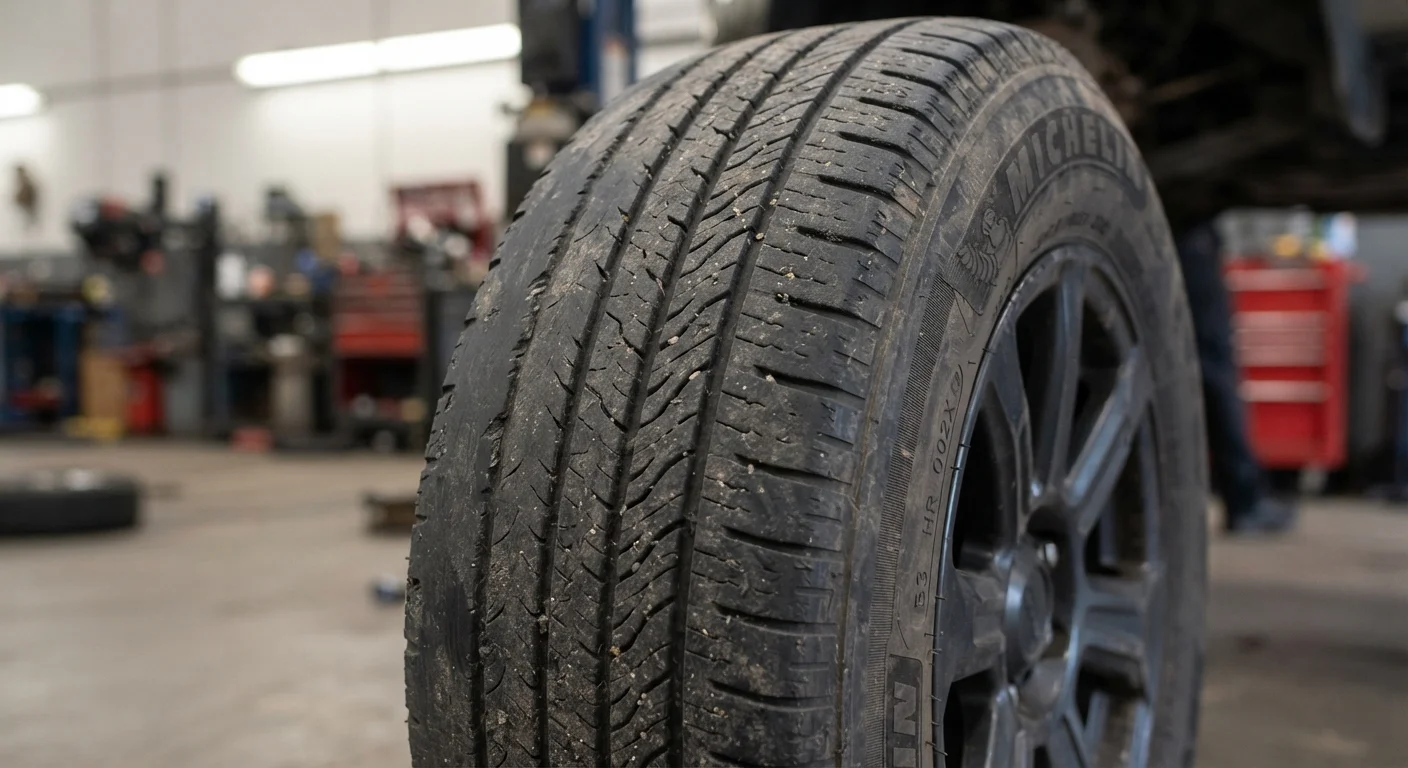
Why Tyre Wear Patterns Matter
Your tyres are in constant contact with the road, and the way they wear down is rarely accidental. Each tread wear pattern is a diagnostic signal - a visible clue pointing to an underlying mechanical or maintenance issue. Ignoring these patterns doesn't just shorten tyre life; it can compromise handling, fuel efficiency, and safety.
Regularly inspecting your tyres - ideally every month and before long trips - takes less than five minutes and can prevent significantly more expensive repairs down the road. The key is knowing what to look for.
| US legal minimum tread depth | 2/32 inch (National Highway Traffic Safety Administration (NHTSA)) |
| Recommended replacement threshold (wet conditions) | 4/32 inch (AAA and tyre industry safety guidance) |
| Typical tyre rotation interval | Every 5,000-7,500 miles (General manufacturer guidance; check your owner's manual) |
| Main causes of uneven wear | Incorrect pressure, misalignment, worn suspension |
| Pressure check frequency | Monthly and before long trips (NHTSA recommendation) |
Common Wear Patterns and What They Indicate
Understanding each wear pattern helps you diagnose problems early. Here are the most frequently encountered types:
- Centre wear (worn in the middle): The tread is most depleted along the centre strip, with edges remaining relatively intact. This is a classic sign of overinflation. When a tyre is inflated beyond the manufacturer's recommended pressure, it balloons outward, causing the centre to bear disproportionate load.
- Edge wear (worn on both outer edges): Both shoulders of the tyre wear faster than the centre, indicating underinflation. A tyre that is too soft flattens and spreads, shifting contact to the edges. Underinflation also generates excess heat, which degrades rubber faster.
- One-sided wear (worn on one edge only): Excessive wear on just one shoulder - inner or outer - usually points to a wheel alignment problem, specifically incorrect camber. Camber refers to the angle of the wheel relative to vertical; when it is off, one side of the tyre carries far more load than the other.
- Cupping or scalloping (dips or cups around the tread): An uneven, wavy, or patchy wear pattern that looks scalloped around the circumference typically signals worn or failing shock absorbers or struts. These components control how the tyre meets the road surface; when they fail, the tyre bounces rather than rolling smoothly.
- Feathering or sawtooth wear: Tread blocks that appear rounded on one side and sharp on the other - running your hand across the tread reveals a sawtooth feel - indicate a toe alignment problem. Toe refers to whether the front of your tyres point inward (toe-in) or outward (toe-out) relative to each other.
- Diagonal or patchy wear: Irregular patches distributed unevenly around the tyre can result from infrequent tyre rotation, imbalanced wheels, or a combination of alignment and suspension issues.
Camber
The inward or outward tilt of a tyre when viewed from the front of the vehicle. Incorrect camber causes one-sided tread wear and is corrected through a wheel alignment service.
Toe alignment
The direction tyres point relative to each other when viewed from above. Toe-in means the fronts of the tyres angle toward each other; toe-out means they angle away. Misalignment causes feathered or sawtooth tread wear.
Tread depth
The measurement from the top of the tread block to the bottom of the groove. Legal minimum in the US is 2/32 of an inch, though replacement at 4/32 is widely recommended for safer wet-weather performance.
Shock absorber / Strut
Suspension components that dampen the movement of the vehicle over road surfaces, keeping the tyre in consistent contact with the road. Worn units cause cupping or scalloped wear patterns.
Overinflation
A tyre pressure condition where the tyre is inflated above the manufacturer's recommended level. The tyre stiffens and contacts the road primarily through its centre, causing accelerated centre-tread wear.
Underinflation
A tyre pressure condition where the tyre is inflated below the recommended level. The tyre flattens and spreads, resulting in increased edge contact and wear on both outer shoulders.
Steps to Take When You Spot Unusual Wear
Identifying a pattern is only the first step. Acting on it promptly protects your investment and your safety.
- Check tyre pressure immediately. Use a calibrated gauge and compare readings to the pressure specified on the placard inside your driver's door or in the owner's manual - not the maximum pressure printed on the tyre sidewall itself.
- Have wheel alignment checked. If you notice one-sided or feathered wear, a wheel alignment inspection is warranted. Alignment can drift gradually from normal driving, road imperfections, or a hard kerb impact.
- Inspect suspension components. Cupping or scalloping almost always requires a suspension check. A qualified mechanic should assess shock absorbers, struts, and related hardware - these are safety-critical systems.
- Rotate your tyres on schedule. Most manufacturers recommend rotating tyres every 5,000 to 7,500 miles. Regular rotation distributes wear more evenly across all four tyres, extending their usable life.
- Assess whether replacement is needed. In the US, tyres are legally required to be replaced when tread depth reaches 2/32 of an inch. Many safety advocates recommend replacing them at 4/32 of an inch, particularly in wet conditions. Use a tread depth gauge or the penny test as a rough guide.
When to See a Mechanic Right Away
Cupping, severe one-sided wear, or any wear pattern that appears suddenly rather than gradually can indicate a safety-critical suspension or steering fault. Do not delay having the vehicle inspected if you notice rapid or dramatic tread loss on one section of a tyre. Continuing to drive on significantly worn or damaged tyres increases blowout risk, particularly at highway speeds.
This article is for general informational purposes only. For safety-critical repairs - particularly those involving suspension or braking systems - always consult a qualified automotive technician.