

Why Battery Myths Persist
Car battery misinformation spreads because most drivers only think about their battery when something goes wrong - and by then, they're already stranded. Advice passed down from older vehicles, oversimplified repair-shop shorthand, and genuine confusion about how modern batteries work all feed a growing body of myths that feel plausible but fail in practice.
Understanding what your battery actually does - and what it doesn't - is a foundational piece of vehicle ownership. It connects directly to broader maintenance awareness; for context on other commonly skipped upkeep, see our piece on maintenance items drivers routinely put off.
Myth
Letting your car idle for 15-20 minutes will fully recharge a dead battery.
Fact
Idling produces very limited charging current and cannot meaningfully recover a deeply discharged battery.
At idle, an alternator operates at low RPM and delivers far less current than when the engine is under driving load. Recovering a significantly depleted battery typically requires sustained highway driving for 30 minutes or more - and even that may fall short. A deeply discharged battery is best recharged with a dedicated battery charger set to the appropriate amperage for the battery type.
Myth
Cold weather is what kills car batteries.
Fact
Cold weather reveals and accelerates battery failure, but the underlying weakness typically develops over months of use.
Low temperatures reduce a battery's cranking power and slow the chemical reactions needed to deliver current. However, a battery in good condition handles cold well. What cold weather actually does is expose a battery that has already lost capacity through age, sulfation, or repeated undercharging. A battery that fails in January was likely deteriorating for months prior.
Myth
Jump-starting a car is straightforward and carries no real risk to modern vehicles.
Fact
Incorrect jump-start procedures can damage or destroy a modern vehicle's onboard electronics.
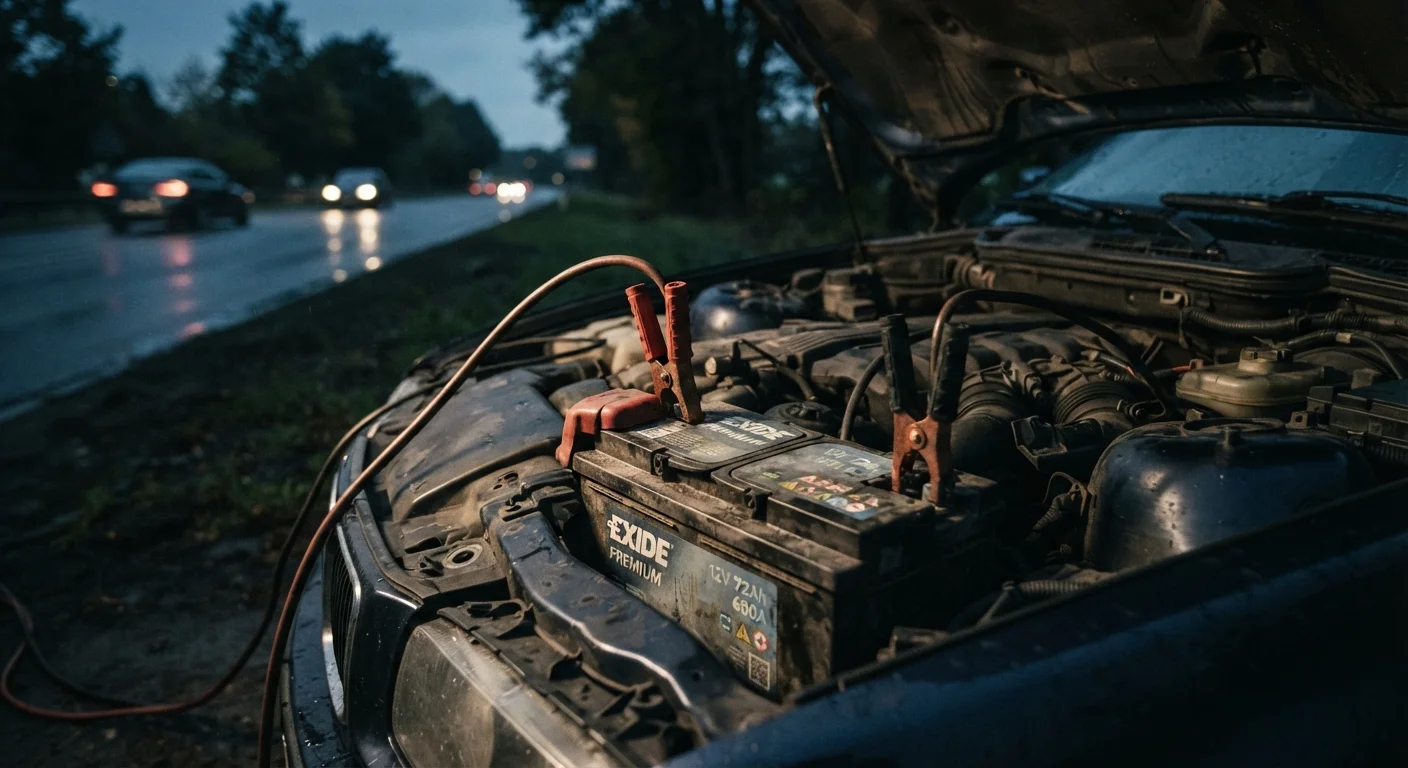
Contemporary vehicles contain numerous sensitive electronic control units (ECUs) that are vulnerable to voltage spikes. Connecting jumper cables in the wrong order, connecting to the wrong terminals, or using an underpowered jump starter can send damaging surges through these systems. Always follow the sequence specified in your owner's manual - typically positive-to-positive first, then ground - and allow the donor vehicle to run briefly before attempting to start the disabled vehicle.
[important_callout]Myth
A battery more than three years old should be replaced regardless of how it tests.
Fact
Age is a rough guideline, not a diagnostic tool - a load test gives a far more accurate picture of remaining capacity.
Battery lifespan varies considerably based on climate, driving patterns, and maintenance. A battery in a hot-climate vehicle may degrade faster; one in a mild climate with regular use may remain serviceable well beyond five years. Many auto parts retailers and repair shops offer free battery load testing, which measures actual cranking capacity under simulated demand - that result matters far more than the manufacture date alone.
Myth
Leaving a battery connected to a trickle charger indefinitely keeps it in peak condition.
Fact
Continuous charging without automatic shutoff can overcharge a battery, generating heat and accelerating internal damage.
Traditional trickle chargers designed to deliver a constant low current can, over extended periods, drive a battery into an overcharged state. This causes electrolyte evaporation in flooded batteries and can warp plates internally. Smart chargers - often called maintainers - that switch to float mode when the battery is full are the appropriate tool for long-term storage. Check that any charger you use is compatible with your battery's chemistry (flooded, AGM, or gel).
What the Evidence Actually Shows
Modern automotive batteries - including standard flooded lead-acid and AGM (absorbent glass mat) units - operate under conditions and tolerances that differ significantly from batteries in vehicles made decades ago. Many widely held beliefs were shaped by older technology and no longer apply.
~4 years
Average US car battery lifespan
Industry estimates from battery manufacturers and automotive testing organizations generally place average battery life between three and five years, varying by climate and usage.
~50%
Capacity loss at 0°F vs. 80°F
Cold-cranking testing data indicates a fully charged lead-acid battery can lose roughly half its rated capacity when temperatures drop to 0°F (−18°C).
3-7 min
Idle time to meaningfully recharge after a start
Automotive engineers note that short idle periods recover only a fraction of the energy used during starting, making prolonged idling an inefficient charging method.
Electrical load demands have also increased sharply. Today's vehicles run multiple control modules, infotainment systems, and driver-assist features simultaneously, placing higher baseline demands on the battery even when the vehicle is parked. That context changes how we should think about charging, storage, and replacement thresholds.
Sound battery decisions are part of sound overall ownership decisions. Our guide on car ownership decisions people often get wrong covers related missteps worth avoiding.
Don't Rely on Visual Inspection Alone
A battery that looks undamaged - no visible corrosion, no cracked case - can still be near the end of its service life. Internal plate degradation and capacity loss are not visible from the outside. If you notice sluggish cranking, dimming headlights at idle, or frequent need for jump-starts, have the battery load-tested by a qualified technician rather than waiting for a complete failure.