
What Actually Changes After 40
The body at 40 is not broken - but it is different, and understanding those differences makes training far more effective. Several well-documented physiological shifts begin to accelerate in the fourth decade of life.
Sarcopenia (the gradual loss of skeletal muscle mass) begins as early as the mid-thirties and progresses at a rate of roughly 3-5% per decade without intervention. Alongside this, bone mineral density tends to decline, particularly in women approaching perimenopause. Metabolic rate drops modestly - largely because of that muscle loss, since muscle tissue burns more energy at rest than fat tissue.
Recovery capacity also changes. Hormonal shifts, including lower circulating levels of testosterone and growth hormone, mean that tissue repair after exercise takes longer. Joints may signal more clearly after hard sessions. Connective tissue - tendons and ligaments - becomes somewhat less elastic and more injury-prone under sudden or excessive load.
Sarcopenia
The gradual, age-related loss of skeletal muscle mass and strength. It begins in the mid-thirties and accelerates without resistance exercise to counteract it.
Bone mineral density
A measure of how much mineral (mainly calcium) is packed into bone tissue. Higher density means stronger, more fracture-resistant bones.
Anabolic resistance
The reduced ability of older muscle to synthesize new protein in response to exercise and dietary protein, compared to younger muscle. It means older adults often need to be more deliberate about protein intake and training stimulus.
Progressive overload
The principle of gradually increasing the demands placed on the body during exercise - through more weight, reps, or intensity - so the body continues to adapt rather than plateau.
Metabolic rate
The rate at which your body burns energy (calories) at rest and during activity. It is partly determined by muscle mass, which is why maintaining muscle through exercise supports metabolic health.
None of this means exercise becomes less effective. It means the approach needs to be deliberate rather than improvised.
What Stays the Same (and Why That Matters)
Here is the reassuring counterpoint: the core mechanisms of physical adaptation are not age-gated. Your muscles still respond to progressive resistance. Your cardiovascular system still strengthens in response to sustained aerobic effort. Your brain still releases mood-regulating neurochemicals during and after exercise. The fundamental biology of getting fitter is intact.
Large-scale studies - including long-term cohort data published in journals such as JAMA Internal Medicine and The Lancet - consistently show that adults who become physically active in midlife achieve significant reductions in all-cause mortality, cardiovascular disease risk, and markers of metabolic dysfunction, even when activity begins late.
To understand what each modality contributes to long-term health, see our comparison of strength training and cardio.
Late starters often outperform expectations
Adults who begin regular exercise in their 40s and 50s frequently achieve fitness levels that rival those of peers who were moderately active throughout their lives. Starting later is not a disadvantage - it is simply a different starting point. Consistency over months and years is far more predictive of outcomes than the age at which you begin.
Where to Begin: Practical First Steps
Before starting any new exercise program in midlife, a conversation with a healthcare provider is advisable - not as a formality, but as genuine due diligence. This is especially true if you have cardiovascular risk factors, joint problems, diabetes, or have been largely sedentary for more than a year.
Once cleared, the most effective starting point for most beginners over 40 is low-to-moderate intensity movement done consistently. Walking, bodyweight exercises, swimming, and cycling are all accessible entry points with low injury risk. Trying to match a 25-year-old's program from day one is a common and counterproductive mistake.
A few practical anchors for the early weeks:
- Choose activities you find tolerable or enjoyable - adherence depends heavily on this.
- Start with two to three sessions per week and assess how your body responds between sessions.
- Pay attention to how you feel 24-48 hours after exercise, not just during it.
- Warm up deliberately; dynamic movement before loading is more than a ritual.
For guidance on avoiding the daily habits that can quietly erode your early progress, see our article on behaviors that undermine fitness.
Structuring Your Routine Intelligently
A sustainable midlife routine generally combines resistance training, cardiovascular activity, and intentional mobility work. The ratio depends on your goals, current baseline, and any existing physical limitations.
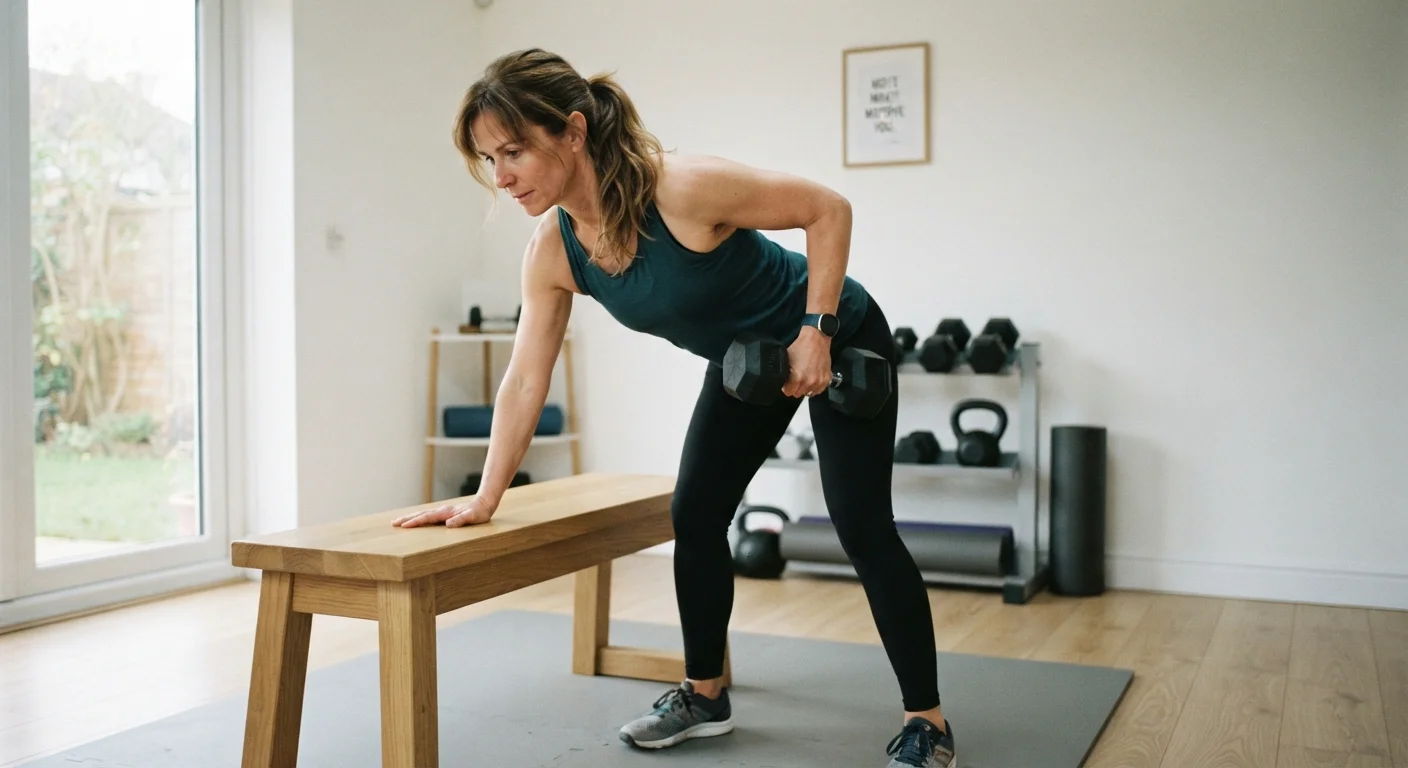
Resistance training deserves particular emphasis after 40. It is the most direct countermeasure to sarcopenia and one of the few interventions shown to maintain bone density in older adults. Two to three sessions per week targeting major muscle groups is a widely supported starting framework.
Cardiovascular exercise can be moderate-intensity (brisk walking, cycling, swimming) most days, or vigorous-intensity on fewer days - both meet public health guidelines when accumulated to the recommended weekly volume.
Mobility and flexibility work - including controlled stretching, yoga, or targeted joint exercises - becomes increasingly important for injury prevention and functional movement quality as connective tissue stiffens with age.
Once you have a feel for consistent exercise, the principle of progressive overload - gradually increasing challenge over time - is essential for continued adaptation rather than plateau.
For a practical framework for building these elements into your week, see building a weekly exercise routine that sticks.
Avoid jumping to high-intensity programming too soon
High-intensity interval training (HIIT) and heavy compound lifting are not inherently off-limits after 40, but they carry a higher injury risk when introduced before a baseline of movement quality and work capacity has been established. Connective tissue adapts more slowly than muscle, meaning tendons and ligaments can lag behind apparent strength gains. Build a foundation of moderate-intensity, consistent training for at least 8-12 weeks before substantially increasing intensity.
Recovery, Sleep, and the Habits That Help or Hurt
Recovery is not passive - it is where adaptation actually happens. After 40, this part of the equation requires more deliberate attention than most beginners expect.
Sleep quality is among the most influential recovery factors available. During deep sleep stages, the body releases growth hormone and conducts the cellular repair initiated by exercise. Chronic sleep restriction measurably impairs both performance and recovery in adults of all ages, and its effects compound in midlife.
Protein intake also matters more than it did at 25. Research suggests older adults may need somewhat higher protein per unit of body weight to stimulate equivalent muscle protein synthesis - a threshold sometimes described in research literature as the anabolic resistance of aging muscle. Discuss specific nutritional needs with a registered dietitian rather than relying on general estimates.
Hydration, stress management, and avoiding prolonged sedentary periods between sessions all contribute meaningfully to how well your body recovers and responds. This broader picture of physical health - how fitness, nutrition, and daily habits interact - is explored in our complete overview of physical health for adults.
This article is for general informational purposes only and does not constitute medical advice. Consult a qualified healthcare professional before beginning any new exercise program, particularly if you have existing health conditions or have been inactive for an extended period.