

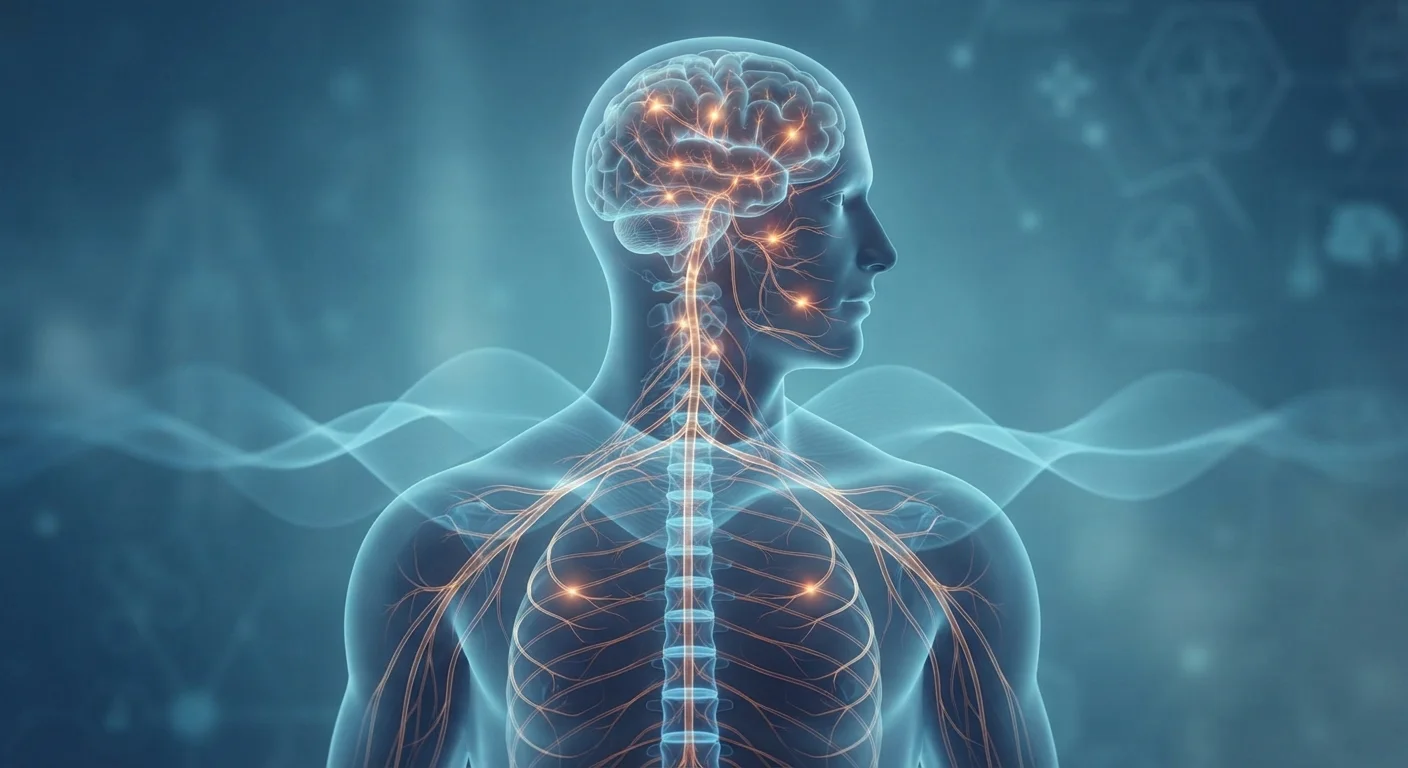
What the Nervous System Actually Does
The nervous system is your body's primary communication network. It processes information from your environment, coordinates your body's internal functions, and generates responses - all simultaneously and largely without conscious direction.
For stress purposes, the most relevant division is the autonomic nervous system (ANS), which operates below the level of conscious thought. The ANS has two complementary branches:
- Sympathetic nervous system: Activates during perceived threats. Increases heart rate, redirects blood to muscles, and prepares the body for action.
- Parasympathetic nervous system: Promotes recovery. Slows heart rate, supports digestion, and restores equilibrium after a stressor passes.
In a healthy stress response, these systems alternate fluidly. The trouble begins when the balance tips persistently toward sympathetic dominance - the hallmark of chronic stress.
Autonomic Nervous System (ANS)
The part of the nervous system that regulates involuntary body functions - heart rate, breathing, digestion - without conscious effort. It includes the sympathetic and parasympathetic branches.
Fight-or-Flight Response
An automatic physiological reaction to a perceived threat that prepares the body for rapid action by increasing heart rate, redirecting blood flow, and releasing stress hormones.
Cortisol
A hormone released by the adrenal glands during stress. It raises blood sugar, sharpens alertness, and suppresses some immune functions - helpful briefly, disruptive when chronically elevated.
HPA Axis
The hypothalamic-pituitary-adrenal axis - a communication loop between the brain and adrenal glands that governs the release of cortisol in response to stress.
Amygdala
A small, almond-shaped brain region that rapidly detects potential threats and triggers the alarm signals that initiate the stress response.
Prefrontal Cortex
The front part of the brain responsible for reasoning, decision-making, and emotional regulation. It can dampen the stress response, but chronic stress weakens this capacity.
Chronic Stress
A prolonged state of stress activation in which the body does not fully return to baseline between stressors, leading to wear on multiple body systems over time.
Parasympathetic Nervous System
The 'rest and digest' branch of the autonomic nervous system that promotes recovery, slows heart rate, and restores balance after a stress response.
The Fight-or-Flight Response Explained
When your brain perceives a threat - whether it's a car cutting you off or a looming work deadline - a rapid, automatic sequence begins. The hypothalamus, a small region at the brain's base, signals the adrenal glands to release adrenaline (epinephrine). Within seconds:
- Heart rate accelerates to pump more blood to muscles.
- Pupils dilate to sharpen vision.
- Digestion slows - energy is diverted elsewhere.
- Pain perception temporarily dulls.
This cascade is evolutionary: it helped our ancestors survive immediate physical danger. The response is not a malfunction. It becomes a health concern only when it activates repeatedly in the absence of genuine physical threat - a pattern that's common in modern daily life.
The Response Is Not the Problem
Experiencing a fight-or-flight response is normal and healthy - it's the body working as designed. What matters is whether the response resolves appropriately afterward. Noticing your stress response without judging it is itself a useful first step in managing it.
What Cortisol Does - and Why It Matters
Alongside adrenaline, the hypothalamic-pituitary-adrenal (HPA) axis triggers the release of cortisol, often called the primary stress hormone. Cortisol acts on a slower timeline than adrenaline but has broader and more lasting effects.
Its acute roles are genuinely helpful: it raises blood sugar for quick energy, sharpens alertness, and briefly suppresses inflammation to keep the body functional under pressure. The problem arises with sustained elevation:
- Immune suppression: Chronically high cortisol reduces the effectiveness of immune responses.
- Metabolic disruption: Persistent cortisol elevation is associated with increased abdominal fat storage and blood sugar dysregulation.
- Sleep interference: Cortisol follows a natural daily rhythm; chronic stress disrupts that pattern, impairing sleep quality.
Understanding cortisol's dual nature - useful short-term, disruptive long-term - is central to making sense of why stress management matters beyond simply feeling calmer.
When Stress Becomes Chronic
Acute stress is self-limiting: the threat passes, adrenaline clears, cortisol declines, and the parasympathetic system restores balance. Chronic stress disrupts this cycle. The body remains in a state of partial activation, never fully returning to baseline.
Research links chronic stress to a range of measurable health effects, including elevated cardiovascular risk, impaired immune regulation, disrupted hormonal balance, and increased susceptibility to anxiety and depression. The mechanisms are physiological, not imaginary - and they reinforce the importance of taking stress seriously as a health issue, not a personal failing.
If you find that standard stress-reduction approaches don't seem to help, it may be worth exploring whether underlying obstacles are at play. Our article on common reasons stress relief efforts stall examines factors that are often overlooked.
Chronic Stress Is a Physical Health Issue
The effects of chronic stress on the heart, immune system, and brain are physiological, not simply emotional. If you are experiencing persistent physical symptoms - such as chest tightness, chronic fatigue, frequent illness, or significant sleep disruption - consult a healthcare professional rather than relying solely on self-management strategies.
Your Brain on Stress: Key Structures Involved
Three brain regions are especially central to the stress response:
- Amygdala
- Often called the brain's alarm center, the amygdala rapidly evaluates incoming sensory information for potential threats. It can trigger a stress response before conscious awareness even registers the stimulus.
- Hippocampus
- Critical for memory and context, the hippocampus helps the brain assess whether a current situation is truly dangerous by comparing it to past experience. It also plays a role in shutting off the stress response once danger has passed. Chronic cortisol exposure can reduce hippocampal volume over time, though this process is not fully irreversible.
- Prefrontal cortex (PFC)
- The seat of executive function - reasoning, planning, and impulse control. The PFC can modulate the amygdala's alarm signals, effectively applying the brakes on the stress response. Chronic stress weakens this regulatory connection, which helps explain why stressed individuals often feel less able to think clearly or control emotional reactions.
For a broader look at how stress fits within mental wellness overall, see the Mental Wellness From Start to Finish guide, which covers concepts, coping tools, and professional resources.
What You Can Do With This Knowledge
Understanding the biology of stress isn't just intellectually interesting - it has practical implications. When you recognize that shallow, rapid breathing signals danger to your autonomic nervous system, it makes sense that slow, deliberate breathing can interrupt the cycle. When you understand that the prefrontal cortex regulates the amygdala, techniques that reduce cognitive load (like writing thoughts down) are not just coping tricks - they're neurologically grounded strategies.
This article is a starting point. For readers ready to build structured habits around this knowledge, the guide to building a daily stress management routine translates this science into sustainable everyday practices.
It's also worth distinguishing between normal stress and something more persistent. If worry feels constant and disconnected from specific events, the comparison of everyday worry and clinical anxiety may help clarify the distinction - and whether professional support is appropriate.
National Institute of Mental Health (NIMH) - Stress
NIMH provides accessible, evidence-based overviews of how stress affects mental and physical health, along with guidance on when and how to seek professional support.
American Psychological Association - Stress in America
APA's ongoing research and public resources explain stress trends among Americans and offer practical, research-backed coping frameworks grounded in current psychology.
Mind & Body Practice Overview - NCCIH
The National Center for Complementary and Integrative Health outlines evidence levels for various mind-body approaches - such as breathing exercises and meditation - relevant to stress regulation.
This article is for general informational and educational purposes only and does not constitute medical advice. Always consult a qualified healthcare professional for questions about your personal health, symptoms, or treatment options.