

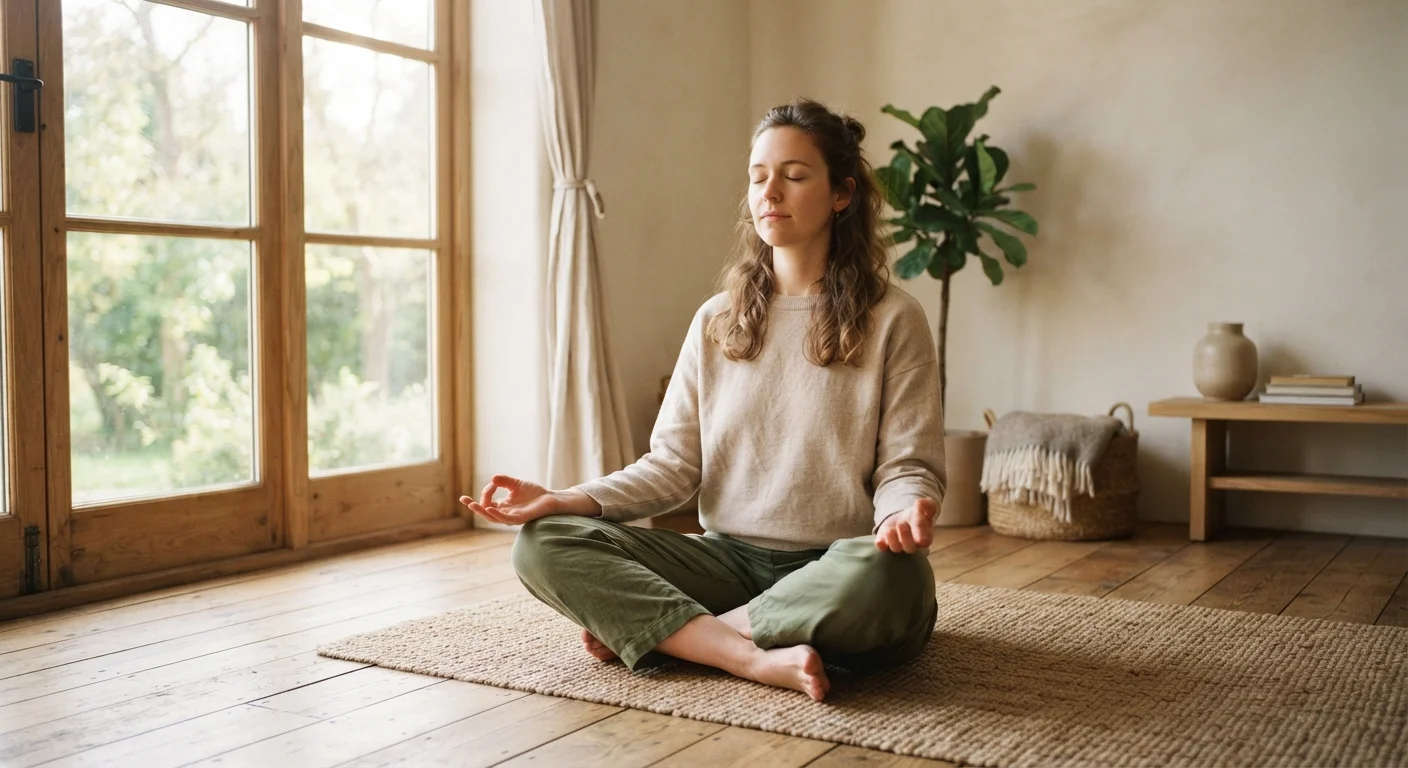
What Grounding Techniques Are and Why They Matter
Grounding techniques are structured exercises designed to anchor a person's awareness to the present moment - to their immediate surroundings, bodily sensations, or a concrete mental task - rather than to distressing thoughts or memories. Clinicians commonly recommend them for anxiety, panic, trauma responses, and dissociative experiences.
The underlying mechanism is well-established in stress physiology: anxiety tends to activate the body's threat-response system, pulling attention toward perceived danger - often imagined, anticipated, or remembered rather than immediately present. Grounding interrupts that loop by engaging the senses or the prefrontal cortex in a concrete, here-and-now task. This doesn't eliminate anxiety, but it can reduce its intensity enough for a person to regain a sense of control.
It's worth being clear about scope: grounding is a coping strategy, not a treatment. If you're unsure whether what you experience is everyday stress or something more clinical, the distinction matters - see our overview on anxiety disorder vs. everyday worry for context on where clinicians draw that line.
Grounding Is a Tool, Not a Treatment
These techniques can help manage acute distress, but they do not address the underlying causes of anxiety. Clinical anxiety disorders - including generalized anxiety disorder, panic disorder, and PTSD - typically require structured treatment such as CBT, medication, or a combination. Grounding is best understood as a complement to professional care, not a replacement for it.
Below are five well-documented grounding approaches, along with honest notes on what each one does and does not offer.
Five Evidence-Informed Grounding Techniques
The 5-4-3-2-1 Sensory Method
One of the most widely taught grounding exercises, the 5-4-3-2-1 technique asks a person to deliberately notice five things they can see, four they can touch, three they can hear, two they can smell, and one they can taste. By sequentially engaging each sensory channel, it pulls attention away from internal distress and toward the external environment.
This approach is frequently used in trauma-informed care settings and is considered low-risk and broadly accessible. It requires no equipment and can be done unobtrusively in most situations. Its limitation is that heavily dissociated individuals may find sensory input dull or unreachable during acute episodes - in those cases, therapist guidance is important.
Engaging each sense in sequence anchors attention to the present rather than anxious thought loops.
Controlled Breathing with a Physical Anchor
Controlled, diaphragmatic breathing is among the best-supported techniques in the anxiety literature. Adding a physical anchor - such as placing one hand on the chest and one on the abdomen, or tracing a finger along the knuckles - layers a tactile grounding element onto the physiological benefit.
Slow, deliberate exhalation activates the parasympathetic nervous system, helping reduce heart rate and the physiological intensity of a stress response. The physical anchor keeps attention on the body rather than drifting back to anxious thoughts. Research consistently supports controlled breathing as effective for anxiety reduction; it is a core component in cognitive behavioral therapy (CBT) and acceptance and commitment therapy (ACT) protocols.
Slow exhalation directly engages the parasympathetic nervous system, calming the body's stress response.
Cognitive Grounding: Mental Categorization Tasks
Cognitive grounding uses structured mental tasks to occupy the prefrontal cortex - the part of the brain involved in executive function - and reduce the brain's capacity to sustain an anxious spiral simultaneously. Common examples include naming all the countries in a continent, counting backwards from 100 by sevens, or listing items in a specific category (types of trees, capital cities, song titles).
These tasks are particularly useful for people whose anxiety manifests primarily as racing thoughts rather than strong physical symptoms. They require enough cognitive engagement to compete with rumination without being so demanding that they create additional stress. The key is choosing a task that is challenging but not frustrating.
Structured mental tasks occupy the prefrontal cortex, reducing its capacity to sustain anxious rumination.
Temperature-Based Grounding
Applying cold or warm sensation to the skin - holding ice, splashing cold water on the face, or gripping a warm mug - can produce a rapid shift in physiological state. Cold exposure in particular activates the dive reflex, which triggers a parasympathetic response that can quickly reduce heart rate.
Temperature-based grounding is commonly referenced in dialectical behavior therapy (DBT), particularly the TIPP skills framework developed for emotional regulation. It is considered most appropriate for moments of intense emotional distress where other techniques haven't gained traction. Individuals with certain cardiovascular or sensory conditions should check with their physician before using cold-exposure techniques.
Cold exposure activates the dive reflex, producing a rapid parasympathetic response that can interrupt acute distress.
Movement-Based Grounding
Deliberate, mindful physical movement - slow walking with attention to each footstep, pressing feet firmly into the floor, or progressive muscle relaxation - uses proprioception (the body's sense of its own position in space) as a grounding channel. This is especially effective for people who find stillness difficult when anxious.
Movement-based approaches align with growing research on the body-brain relationship in emotional regulation, including work in somatic therapies and mindfulness-based stress reduction (MBSR). They are also naturally compatible with the kind of routine physical activity shown to support long-term mental health. For a broader look at how physical practices support wellness, our complete physical health overview provides additional context. For more on how grounding fits into self-care rituals more broadly, see grounding practices and wellness rituals.
Mindful movement uses proprioception as a grounding channel, making it well-suited for those who struggle with stillness.
Practice When You're Calm, Not Only Anxious
Grounding techniques become more effective with familiarity. Try rehearsing your chosen method during low-stress moments so the steps feel automatic when distress arrives. Even two or three minutes of daily practice can meaningfully improve your ability to access the technique under pressure.
Using Grounding as Part of a Broader Wellness Approach
Grounding techniques are most effective when they are practiced before a crisis, not only reached for at peak distress. Familiarity with the technique matters: when someone has rehearsed a method calmly, they are more likely to execute it effectively when anxious. This is one reason therapists often introduce grounding early in treatment and encourage routine practice.
That said, no single strategy constitutes a complete mental wellness plan. Grounding fits naturally alongside habits like consistent sleep, physical activity, and structured reflection - elements covered in our guide on building a daily stress management routine. For those beginning to structure self-care more intentionally, a beginner's wellness routine guide offers a broader starting framework.
Grounding is not a substitute for professional mental health care. Anyone experiencing persistent, severe, or functionally impairing anxiety is encouraged to speak with a licensed mental health professional who can provide assessment and evidence-based treatment tailored to their situation.
This article is for general informational and educational purposes only and does not constitute medical or mental health advice. Please consult a qualified healthcare or mental health professional for guidance specific to your circumstances.