

Defining the Terms: What Acute and Chronic Actually Mean
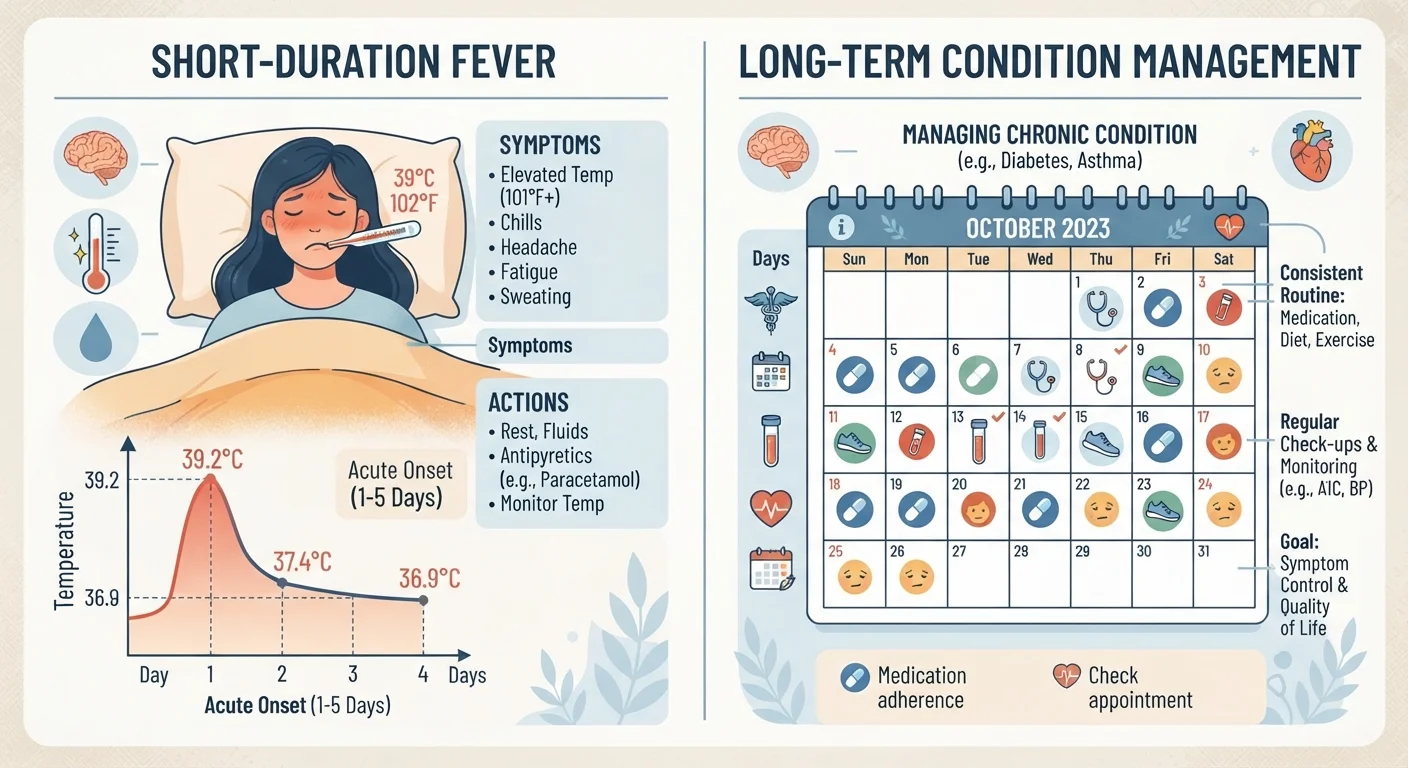
In clinical medicine, acute describes a condition with a rapid or sudden onset and a relatively short duration - typically resolving within days to a few weeks. Chronic, by contrast, refers to conditions that persist for three months or longer, a threshold widely used by the CDC and other public health bodies. These are descriptors of time course, not severity or importance.
Common acute conditions include the flu, a broken bone, a urinary tract infection, or an appendicitis episode. Common chronic conditions include type 2 diabetes, hypertension, asthma, and irritable bowel syndrome. Understanding where a condition falls has direct implications for how a clinician structures care - and what a patient should realistically expect. For a practical example of long-term condition management, see our overview of IBS.
How Each Type Is Typically Managed
Acute conditions are usually managed with a defined, short-term treatment goal: eliminate the pathogen, heal the tissue, or restore a disrupted function. A course of antibiotics, a cast, or a brief hospital stay exemplifies this episodic approach. Recovery is the expected endpoint.
Chronic condition management looks fundamentally different. Because these conditions rarely have a single curative intervention, care focuses on controlling symptoms, slowing progression, preventing complications, and supporting quality of life over time. This often involves lifestyle adjustments, monitoring, medication reviews, and coordinated care across multiple providers. Physical health habits - including consistent movement, nutrition, and sleep - frequently play a supporting role in chronic disease management, though they are not substitutes for professional medical care.
| Acute Condition | Chronic Condition | |
|---|---|---|
| Onset | Sudden or rapid | Gradual or insidious |
| Duration | Days to weeks | 3 months or longer |
| Treatment goal | Resolution or cure | Management and stabilization |
| Care model | Episodic, short-term | Ongoing, coordinated |
| Examples | Flu, UTI, broken bone | Diabetes, hypertension, asthma |
| Patient expectation | Full recovery likely | Sustained management required |
It is worth noting that some conditions blur the boundary. Asthma, for instance, is a chronic condition characterized by acute exacerbations - sometimes called an "acute-on-chronic" presentation. A patient may require both long-term controller therapy and short-term rescue treatment depending on the episode.
Why the Distinction Matters for Patients
Misaligned expectations are one of the most common sources of frustration in healthcare. A patient who approaches a chronic condition expecting it to "go away" with a single intervention may feel the system has failed them - when in reality, the goal of care was never elimination but stabilization. Conversely, over-medicalizing a self-limiting acute illness can lead to unnecessary interventions.
Ask Clinicians the Right Questions
When receiving a diagnosis, ask your provider whether the condition is expected to resolve on its own, requires a defined treatment course, or will need long-term management. This single question can clarify your role in care, what follow-up to expect, and what "success" realistically looks like for your situation. Bringing a written list of questions to appointments helps ensure you leave with a clear understanding.
Understanding this framework also shapes how mental health conditions are categorized and treated. Conditions like generalized anxiety disorder are chronic by nature, whereas a situational anxiety response to a specific stressor may be more acute. The distinction between anxiety disorder and everyday worry follows a similar acute-versus-chronic logic. Similarly, professionals who treat chronic mental health conditions use structured, ongoing approaches - a point explored in our piece on therapy, counseling, and psychiatry.
A Note on Inflammation as a Connecting Thread
Inflammation is one biological process that vividly illustrates the acute-versus-chronic distinction. Acute inflammation is a protective, short-lived response - redness, swelling, and warmth following an injury are signs the immune system is working appropriately. Chronic inflammation, however, is a persistent, low-grade immune activation that plays a role in conditions ranging from cardiovascular disease to autoimmune disorders.
The two are mechanistically related but functionally distinct. What chronic inflammation actually means is frequently misrepresented in popular health media; understanding the clinical definition helps consumers evaluate health claims more critically.
This article is for informational and educational purposes only and does not constitute medical advice. Always consult a qualified healthcare professional for questions about your specific health condition, symptoms, or treatment options.