

Why Transferable Skills Matter More Than Ever
The average US worker changes jobs multiple times across a career, and industry pivots are increasingly common. In this environment, over-reliance on role-specific technical skills creates vulnerability. When a job title disappears or an industry contracts, those skills may have limited value elsewhere. Transferable skills, by contrast, travel with you.
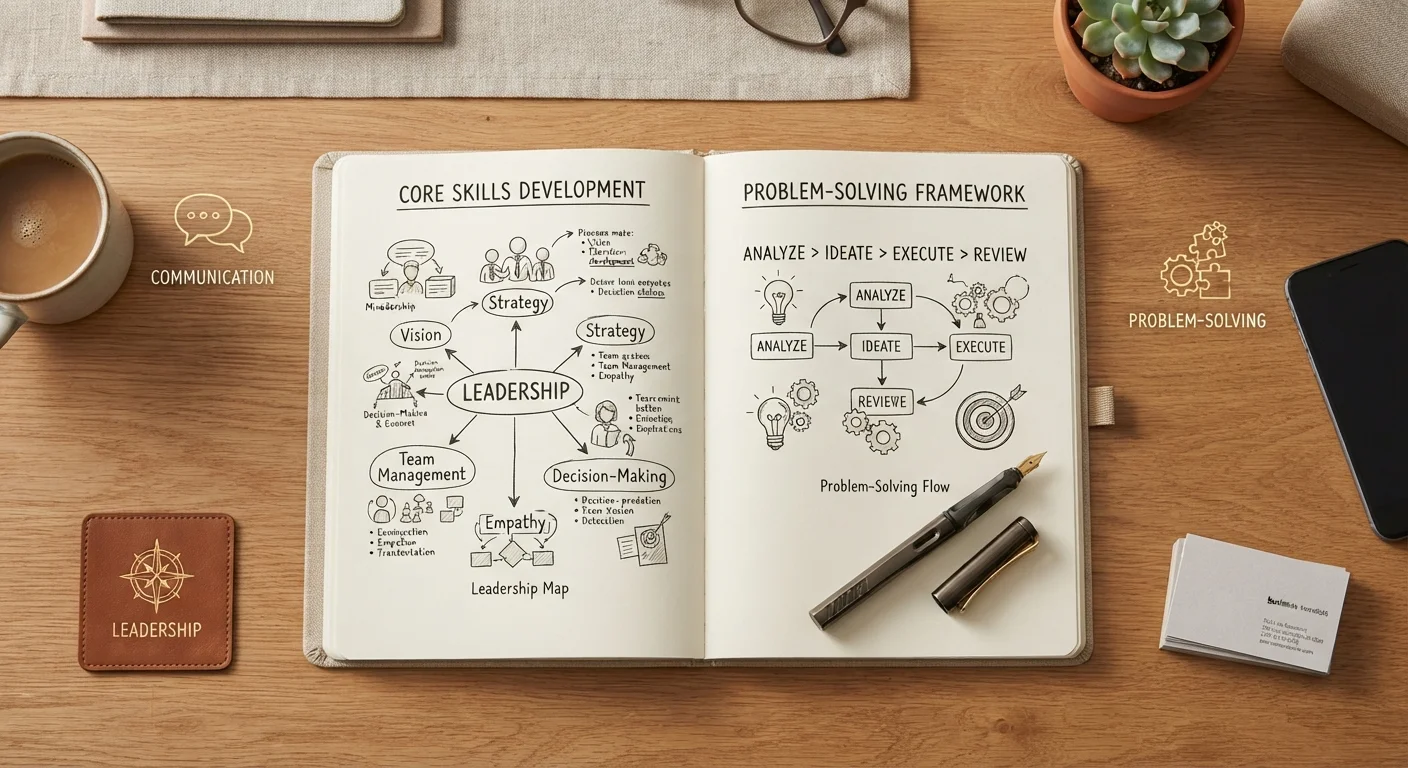
Employers across sectors consistently flag communication, problem-solving, and team leadership as critical hiring criteria - not because technical knowledge doesn't matter, but because these foundational competencies determine how effectively someone applies any knowledge they have. A data analyst who can translate findings into clear business decisions is far more valuable than one who cannot.
One persistent career myth holds that demonstrated results alone earn recognition and advancement. In reality, as discussed in common career beliefs that don't hold up, the ability to articulate what you bring to a role - across functions and industries - is itself a career-critical skill.
92%
Employers prioritizing soft skills in hiring
According to LinkedIn's Global Talent Trends research, the vast majority of talent professionals say soft skills - a core component of transferable competencies - matter as much or more than hard skills.
12+
Average jobs held over a US career
The Bureau of Labor Statistics has tracked that US workers hold numerous jobs across their working lives, reinforcing the value of skills that travel across roles and industries.
Top 3
Most cited hiring gaps: communication, problem-solving, teamwork
Employer surveys conducted by the National Association of Colleges and Employers consistently identify these transferable competencies as the areas where new hires most often fall short.
The Core Categories of Transferable Skills
Transferable skills fall into several broad clusters, each covering competencies applicable across nearly every professional setting:
- Communication: Writing, presenting, active listening, and adapting messaging to different audiences. Relevant in every role, from frontline to executive.
- Leadership and influence: Motivating others, managing through ambiguity, and driving decisions without always having formal authority. See also why technical excellence alone rarely leads to leadership.
- Critical thinking and problem-solving: Structuring problems, evaluating options under uncertainty, and arriving at sound decisions with incomplete data.
- Project and time management: Scoping work, setting priorities, managing dependencies, and delivering under constraints - skills equally valued in a startup and a large corporation.
- Collaboration and conflict resolution: Working across teams, managing competing interests, and reaching productive outcomes in disagreement.
- Adaptability and learning agility: Picking up new tools, processes, or domains quickly - increasingly essential as technology reshapes job functions.
How to Identify and Articulate Your Own Transferable Skills
Many professionals underestimate their transferable skill set because they anchor their identity to job titles or tools rather than the underlying capabilities those roles required. A teacher who managed a classroom of 30 students, individualized instruction, and communicated with parents has exercised project management, differentiated communication, and stakeholder management - all highly applicable in corporate learning, HR, and operations roles.
To surface your transferable skills, work backwards from your accomplishments. For each significant result you've achieved, ask: What did I actually have to do to produce that outcome? The actions - not the industry context - are your transferable assets.
Once identified, the next challenge is expression. When tailoring your CV for a new role, reframe your experience using the language of the target field. The substance stays the same; the framing shifts to meet the employer where they are.
Turn Vague Traits Into Concrete Evidence
Avoid listing 'strong communicator' or 'natural leader' without proof. For each transferable skill you claim, prepare a specific example: the situation, what you did, and a measurable or observable result. This approach works equally well in cover letters, interviews, and performance reviews.
Building and Expanding Your Transferable Skill Set
Transferable skills develop through practice, reflection, and intentional stretch. You don't always need a new credential to build them - many grow through how you approach existing work. Volunteering to lead a cross-functional project, mentoring a junior colleague, or presenting findings to a non-specialist audience all develop communication and leadership capacity.
That said, structured learning accelerates development meaningfully. Upskilling within a career can be formal or informal, and even short-form learning - workshops, reading, peer learning groups - compounds over time.
When weighing whether to stay in a current role or move, consider whether your present position is actively developing your transferable skill set. Roles that stretch your communication, decision-making, or leadership capacity are building career-wide assets regardless of where you go next. For a structured look at those trade-offs, the analysis in internal mobility vs. external job searching provides a useful framework.
“The skills that make someone exceptional in one industry - how they think, how they communicate, how they lead - are almost always the same skills that will make them exceptional in another. The packaging changes; the core doesn't.”
— Beverly Kaye, Career development author and co-founder of Career Systems International